Available Thesis Projects
Project 1
Project 2
Project 3
Project 4
Project assigned
Project assigned
Project assigned
Development and characterisation of bioinspired instructive bioinks to guide the differentiation of amniotic fluid stem cells toward muscolar phenotypes
- Design hydrogels to be used as 3D matrices for cell culture
Understanding how to mimic tissue-specific, biologically relevant chemical and mechanical cues
- Dynamic-mechanical characterisation of soft materials
Use of rheology to characterise and tune the viscoelastic properties of the soft materials
- Tuning material properties for bioprinting applications
Use of a priori and direct techniques to tune the printability of hydrogels
- Characterisation of cell-material interaction
Use of quantitative and qualitative methods to assess cell viability, proliferation and differentiation

Proteomic characterisation of fetal tissues
- Learn techniques in bioinformatics processing of proteomics data
- Understand mass spectrometry techniques for proteomics
- Build pipelines using different R packages
Use of Bioconductor packages and custom scripts to automate processing
- Analysis and integration of data from published dataset
- Generation of a proteomic atlas of fetal tissues

Development of a 3D in vitro model to test drug-induced toxicity
- Design and formulate a functional bioink for fetal in vitro models
Define its composition, ensure reproducible synthesis, and assess chemical stability and quality across batches
- Optimize the viscoelastic properties of the bioink
Establish quantitative correlations between rheological parameters (G′, G″, viscosity) and effective diffusion coefficients
- Develop and validate a cell encapsulation platform compatible with high-throughput screening
Demonstrate efficient encapsulation, preservation of cell viability and functionality, and scalability to multiwell formats
- Conduct a pilot drug toxicity screening using benchmark compounds
Generate dose–response curves, determine IC50 values, and calculate assay quality metrics (e.g., Z′ factor, signal-to-background ratio)

Characterisation of amniotic fluid–derived stem cells and organoids from healthy and pathological pregnancies
- Characterisation of amniotic fluid–derived stem cells under different culture conditions
Evaluation of cell behaviour, morphology, and adaptation in response to different in vitro culture environments
- Comparative analysis of stem cells from healthy and pathological amniotic fluid
Identification of biological and functional differences associated with the pathological origin of the samples
- Assessment of cell proliferation and growth kinetics
Quantitative analysis of cell viability, proliferation rate, and doubling time
- Generation and characterisation of amniotic fluid–derived organoids
Development and study of three-dimensional organoid models from healthy and pathological samples

Assigned
Development of a tissue engineering protocol to biorpint a multi-layered cardiac model
The project will be hosted in Prof Sampaolesi lab at KU Leuven (Belgium) and co-supervised by Prof Pellegata at Polimi
- In vitro models currently represent a powerful tool to address unsolved therapeutic approaches and to dissect developmental biology mechanism
3D bioprinting allows the development of complex and finely controlled models that overcome the current limitations related to bidimensional models and self-organized models.
- The student will tackle the use of a highly advanced 3D bioprinter (3D-BioBOT) to develop a printing protocol using human induced pluripotent stem cell derivatives.
In order to bioprint a multi-layered cardiac model able to recapitulate the different layers of the cardiac tissue.
- The project will involve cell culture, use of the advanced 3D bioprinter and cellular analysis techniques.
Stainings, microscopy, qPCR

Assigned
Mesangioblasts in 3D scaffolds: promoting vascular
- Culture of Endothelial Cells and Mesangioblasts
Basic culture, maintenance and co-culture techniques
- Angiogenesis Assay
Evaluation of endothelial network formation and the role of mesangioblasts in network stability
- Notch pathway modulation
Role of γ-secretase inhibitor in Notch activation and mesangioblast differentiation
- 3D Bioprinting
Fabrication of a 3D model to test angiogenesis in vitro and smooth muscle tissue formation

Assigned
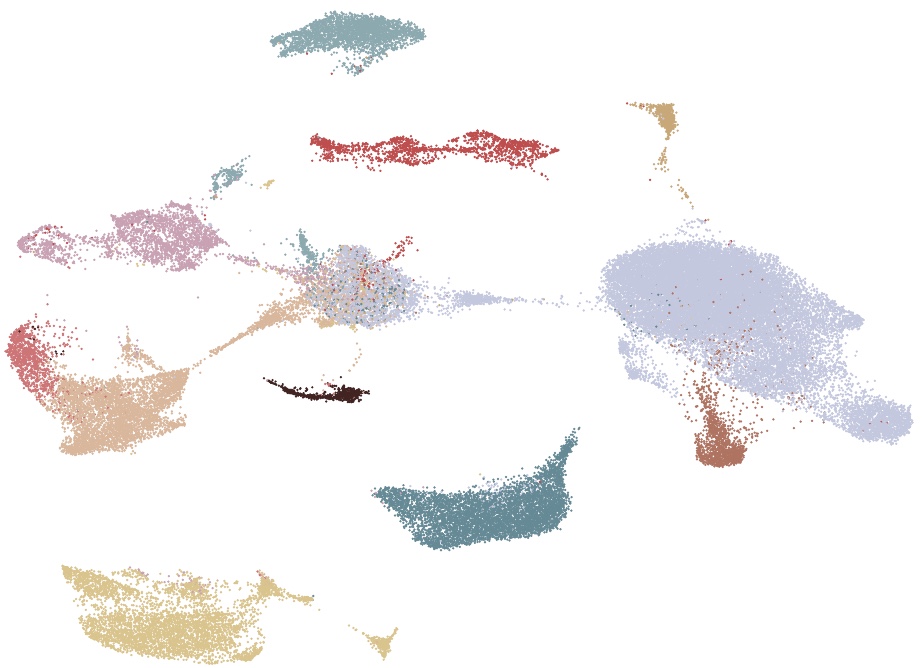
Isolation of specific cell types from Amniotic Fluid (AF) in rare congenital diseases
In collaboration with Gerli-De Coppi Lab (Institute of Child Health, UCL, London)
- Learn techniques in bioinformatics processing single-cell RNA sequencing
For transcriptomic analysis
- Build pipelines using different R packages
Seurat, Bioconductor
- Specific characterization of cell types within AF
- Identification and annotation of distinct cell populations within AF
With different methods (markers analysis, automatic annotation) and in-vitro validation via FACS
- Cell Culture
To generate 2D/3D models
- Tissue culture work
To generate prenatal models